Surface Reorder
26 June - 26 July 2026
Terry Bond
Richard Clements
John Deeper
Karen Densham
Annabel Dover
Carl Morton
Alex Robbins
Sophie Seagrave
Adam Thompson
Jo Townsend
Surface Reorder
Sophie Seagrave
Growing up on the Suffolk coast during the 1990s, coastal erosion existed as a distant certainty. It was a phenomenon explained through geography lessons, local histories, and diagrams of longshore drift; a slow and seemingly predictable process unfolding beyond the scale of everyday life. Living only a few hundred metres from the cliff edge, I understood erosion as something inevitable, yet somehow always deferred to the future.
Two decades later, that future arrived. The house in which I grew up no longer exists. Following successive winters of storm surges, accelerating coastal retreat, and the absence of meaningful intervention, the land on which it stood was reclaimed by the North Sea. What had been a family home for generations survives only as memory and debris dispersed beneath the waves. The period preceding its loss was marked by prolonged uncertainty and displacement, culminating in my mother's death only days before the building itself began to collapse into the soft sandy cliffs below.
These events fundamentally altered my understanding of place. The experience revealed the extent to which notions of home, ownership, territory, and belonging depend upon assumptions of environmental stability that are ultimately fragile. In the aftermath, seeking refuge through my art practice, I legally changed my surname by deed poll to Seagrave. Conceived as a conceptual artwork enacted through administrative and legal processes, the gesture sought to inscribe the loss of place within identity itself. Rather than producing an object, the work operated through a permanent alteration of authorship, naming, and self-description. The adopted surname functions as both memorial and proposition: an acknowledgement that identities, like landscapes, are not fixed entities but are continually reshaped by forces beyond their control. What began as a response to personal upheaval has increasingly come to feel inseparable from broader environmental realities.
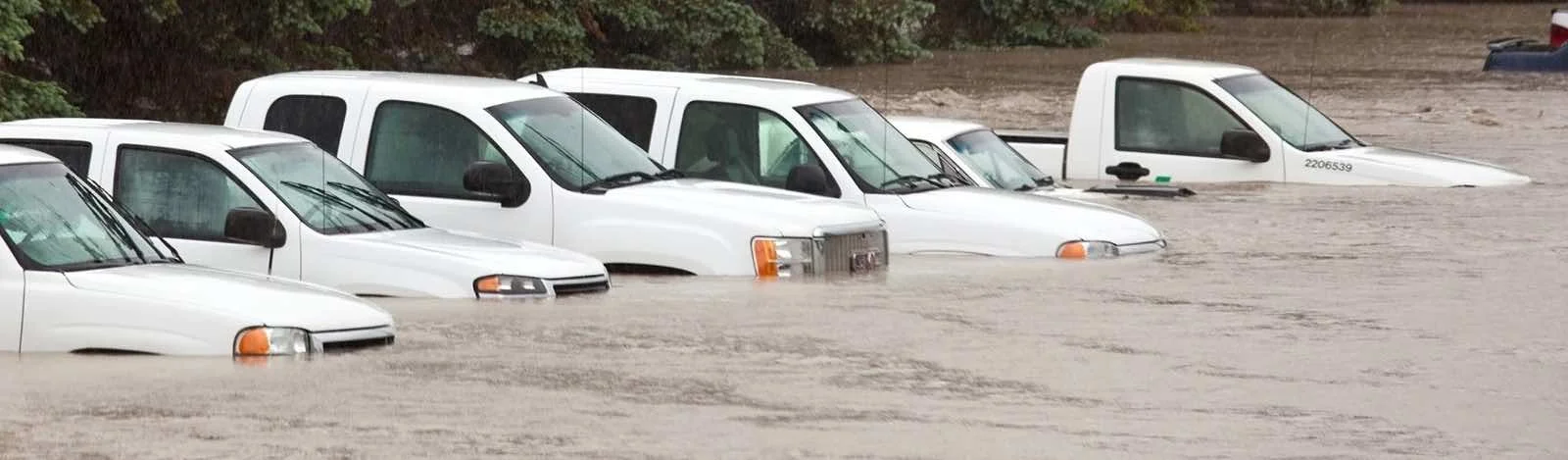
Surface Reorder emerges from this intersection between biography and planetary process. Rather than treating water solely as a subject, the exhibition considers water a primary agent in the production and continual reconfiguration of the Earth's surface. Land, often imagined as stable ground upon which human histories unfold, is instead revealed as contingent, formed through sedimentation, erosion, and ongoing fluctuation across deep time. The surface becomes less a fixed foundation than a temporary condition, continually negotiated by forces operating beyond human temporal and spatial scales.
Within this framework, water functions not only as material and medium but as a structuring force that underpins the conditions of habitability itself. From oceanic circulation to atmospheric systems, from glaciers to groundwater, it moves across states and boundaries, linking geological, ecological, and climatic processes into a dynamic continuum. Human life remains embedded within these systems, despite often proceeding as though they were stable, predictable, and available for mastery. The climate crisis exposes the limits of such assumptions, rendering visible the instability that has always underwritten terrestrial occupation.
The title Surface Reorder refers both to a physical restructuring of landscapes and to a conceptual reorientation in how land is understood. Rising sea levels, intensifying weather systems, and shifting coastlines challenge inherited notions of permanence and ownership, revealing territory as provisional rather than fixed. The apparent solidity of the ground beneath us gives way to a more fluid understanding of place, one in which human claims are continually subject to negotiation by nonhuman forces.
Water also carries a multiplicity of temporalities. It records deep geological histories while acting upon the urgencies of the present. Processes once understood through the lens of millennia increasingly register within individual lifetimes. This compression of timescales destabilises conventional distinctions between past, present, and future, situating personal experience within longer histories of planetary transformation.
At stake is a decentring of the human as the primary agent of spatial order. Water reconfigures landscapes according to logics largely indifferent to social, political, and economic structures. The infrastructures, territories, and identities through which modern life is organised are exposed as temporary alignments rather than enduring forms. In this sense, Surface Reorder frames the present not as an unprecedented rupture but as an intensification of ongoing processes, foregrounding the extent to which human systems remain contingent upon, and vulnerable to, the dynamics of the more-than-human world.
The exhibition also returns to the earlier act of renaming by deed poll, positioning it not simply as a biographical detail but as a conceptual work that recognised identity itself as a site of environmental inscription. If coastlines, territories, and land registries are subject to continual revision, then perhaps names, too, can be understood as surfaces upon which histories of loss, transformation, and adaptation are inscribed.
Sophie Seagrave
For Surface Reorder, at Atlas House, Summer 2026.